Tuesday, 1 March 2016

Papua New Guinea Risking Lives with Inaction on sexual violence - Sarah Young

Papua New Guinea risking lives with inaction on sexual violence, says MSF


Warning: This is quite an intense article!
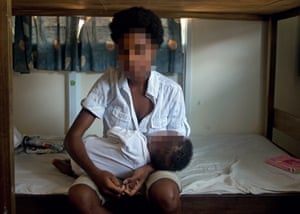

A woman and her child at a safe house in Papua New Guinea.
A woman and her child at a safe house in Papua New Guinea. Photograph: Jodi Bieber/MSF

Médecins Sans Frontières has warned the government of Papua New Guinea that its inadequate response to sexual violence is putting lives at risk.
In a report, published as MSF prepares to end a nine-year project addressing family and sexual violence, the organisation has called on the country’s leaders and international donors to address dangerous gaps in services and legislation.
“Inadequate or inappropriate responses from the country’s hybrid system of formal and traditional justice, and the dysfunction of the protection system, are putting survivors’ lives and health at risk,” says the report, Return to Abuser.


“Patients’ experiences expose a culture of impunity and a continuing reliance on traditional forms of justice to solve serious family and sexual violence cases.”
Human Rights Watch has called PNG “one of the most dangerous places in the world to be a woman or girl”. About 50-70% of women have experienced family or sexual violence.
MSF has treated almost 28,000 survivors of violence and performed more than 68,800 major and minor surgeries, one third for violence-related injuries.
MSF recorded data from more than 3,000 patients who came to clinics in the capital city of Port Moresby and the Highlands town of Tari over the past two years.
It found 94% of patients treated in the clinic after acts of violence were female, and 56% of sexual violence cases were children. Almost nine out of 10 sexual violence cases at the clinics involved rape.
Sticks, knives, machetes, whips and blunt objects were used in 69% of cases and 26% included death threats. More than a fifth of patients had major injuries.
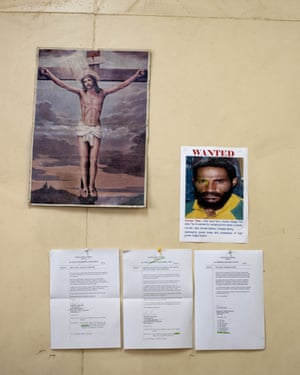

The reception of the police station in Tari, Hela province, Papua New Guinea’
The reception of the police station in Tari, Hela province’. MSF family support centres have collaborated with police officers to protect survivors of violence. Photograph: Jodi Bieber/MSF

In Port Moresby, 70% of the clinic’s sexual violence cases were children, of whom 81% were under 15. Of that younger cohort, almost a quarter were under five. The office of the public prosecutor estimates that 55% of sexual violence cases that have reached the courts dealt with the abuse of children.
While much progress has been made by government, grassroots and international organisations, there are gaps.
A lack of safe houses leaves many women with no choice but to return home to their abuser after seeking medical help. PNG has six safe houses, all unregulated, private and unmonitored. Five are in the capital district and four have fewer than five beds.
None will take boys older than seven, which means mothers seeking shelter cannot take older boys.
More refuges are the obvious and urgent priority for the government, said MSF’s head of mission in PNG, Angelika Herb.
“Survivors reach family support centres … but there’s a huge lack of safe havens and survivors are forced to go back to their communities and partners. We are receiving the same survivors back in the family support centre.”
After seven years of review, the government last year passed its Child Welfare (Lukautim Pikinini) Act, which allows for the establishment of safe houses among other child protection measures. But it’s not yet certified and only four of PNG’s 22 provinces have been allocated budgets for the new law.
Since 2007, MSF has opened family support centres and clinics around the country where survivors can access first aid, psychological treatment, HIV and STI medication, vaccinations and emergency contraception.
Control of the family support centres is being transferred to the national health department. But the 16 centres are in urban areas. Around 85% of Papua New Guineans live in rural areas.
MSF has undertaken outreach work in remote communities to educate villagers about gender-based violence and discrimination against women.


Two years after criminalising domestic violence the government is still drafting relevant regulations, and “many officials are unwilling to commit to full implementation without regulations in hand”, said the report.
“Wider acknowledgement of the problem has not always translated into the practical action required to safeguard the lives, health and dignity of survivors of violence.”
The report calls for the government to take action on promised reform, stalled legislation and police training. It wants family support centres strengthened and essential services for sexual violence victims: free healthcare and ambulance services, along with better education, awareness, and transparency programmes.
Sebastian Roberts, the health department’s family and sexual violence coordinator, said coordination between government and external agencies is effective and improving, but intergovernmental cooperation and resources remain challenging.
“The commitment is there in terms of paper, but when it comes to funding we have a problem,” he says.
There have been some gains in the law and justice sector. In the past 12 years, the number of female village court magistrates recruited rose from 10 to 900, and the Australian department of foreign affairs and trade is working in the highlands to support village courts and other local authorities.
Ume Wainetti, national coordinator of the Family and Sexual Violence Action Committee, said there has been great progress but is concerned about what will happen when MSF ends its project.
“We are just fearful that many of these things may be left on the shelf if there is nobody there to make sure they’re being pushed and pulled to do them properly,” she said.
CITATION:

Davidson, Helen. "Papua New Guinea Risking Lives with Inaction on Sexual Violence, Says MSF." The Guardian. Guardian News and Media, 29 Feb. 2016. Web. 01 Mar. 2016. <http://www.theguardian.com/global-development/2016/feb/29/papua-new-guinea-risking-lives-sexual-violence-medecins-sans-frontieres>.

RESPONSE:

There are obvious concerns in Papua New Guinea that when Médecins Sans Frontières ends their nine year project against sexual violence, there will be little progress to protect victims in the future. Helen Davidson, the Australian based author of this article, is aiding MSF to secure the future of victims by calling on the PNG government and foreign aid agencies to take this cause seriously because lives are at risk.  Obviously, this is an extreme project to be taken on as Human Rights Watch stated that PNG " is one of the most dangerous places in the world to be a women or a girl". Such a statement highlights the need for action to be taken quickly. Davidson has a biased against the PNG government as she is aware of some progress being made but they need to take the issue of family and sexual violence serious. There is great concern that "many of these things may be left on the shelf if there is nobody there to make sure they’re being pushed and pulled to do them properly." Davidson states that two years ago the government criminalized domestic violence but has been slower to take action. The government officials could be reluctant to take on the job because it is a massive issue in PNG. Davidson addresses that one practical way for the government to begin focusing on would be the protection system. Most of the victims have to return home to potential get hurt again because there are no safe houses set up to protect them. This is an ideal starting point for the government.

Wednesday, 24 February 2016

Inside Nepal's busiest leprosy hospital - Sarah Young

Inside Nepal's busiest leprosy hospital

The Lalgadh clinic aims to treat, rehabilitate and provide psychological counselling, but patients often come too late.

Martin Zinggl |  | Poverty & Development, Health, Nepal,Asia
  • Engagement: 1
Lalgadh, Nepal - The Lalgadh Leprosy Hospital in Nepal is considered one of the busiest in the world, with more than 1,200 new patients each year. 

Founded by a British nurse, Eileen Lodge, in 1993, the hospital originally had just three staff members. Now, the medical team is 34-people strong.
Each year, about 250,000 people are infected with leprosy worldwide. Although Nepal's government announced that leprosy had been eliminated in the country in 2009 - based on the World Health Organization's measurement of less than one case per 10,000 members of the population - that does not mean it has been eradicated. In fact, leprosy is endemic in some parts of the Himalayan country. 

Despite the very low risk of infection, the stigma surrounding the disease can be extreme in Nepal. Patients are often isolated and abandoned by their families and communities in a country where the law prohibits infected people from working or marrying. In some rural areas, the disease is considered a curse from God as a punishment for sins committed in a former life.
Nepal's Lalgadh leprosy hospital is 193km southeast of the capital, Kathmandu. It was built in 1993 on the site of a former Nepalese military training ground. [Martin Zinggl/Al Jazeera]
The clinic was erected in the middle of a jungle, meaning that poisonous snakes, spiders and scorpions posed a potential threat to patients. These may have been largely eradicated, but malaria continues to kill people living in and around Lalgadh. [Martin Zinggl/Al Jazeera]
Dr Krishna is the head of the medical staff at Lalgadh and has been working at the hospital since it opened in 1993. It is work that carries deep personal significance for him. His grandparents and mother suffer from leprosy, and he was born and raised in a leprosy colony near Kathmandu. Today, he is an expert on the disease, having dedicated his life to helping the afflicted. 'I wish to ban leprosy out of Nepal, but I know I will not live to see that happening,' he says.[Martin Zinggl/Al Jazeera]
Since it had opened, more than 32,000 leprosy patients have been treated at Lalgadh free of charge. However, Dr Krishna says, 'We hardly know anything about this mysterious disease.' [Martin Zinggl/Al Jazeera]
Leprosy does not discriminate based on gender or age, but it does seem to target the poorest of people. Harsh working and living conditions, poor water supplies and malnutrition can lead to a weakened immune system, allowing the bacteria to enter the body and spread. Dr Krishna says: 'As long as poverty is not fought in this world, leprosy will continue.' [Martin Zinggl/Al Jazeera]
If a patient is treated within six months of the first symptoms appearing, the commonly seen 'claw hands' can be avoided. These deformations of phalanges and joints are a result of the nerves in the toes and fingers dying. [Martin Zinggl/Al Jazeera]
Generally, it takes between two and 20 years after exposure to leprosy for the symptoms to appear - often in the form of nerve damage in the toes, fingers, nose or eyelids. Numbness in these body parts means that wounds often go unnoticed and can become infected. [Martin Zinggl/Al Jazeera]
As a result of the stigmatisation and isolation they often face, many patients suffer from depression. Some become suicidal. At Lalgadh, psychological counselling is an important part of the treatment patients receive. [Martin Zinggl/Al Jazeera]
Patients talk and play cards and board games with each other. The bonds they develop can help counter the effects of their isolation, providing them with moments of happiness and mutual understanding. [Martin Zinggl/Al Jazeera]
Many patients stay at the hospital for a couple of days and up to two years, depending on the severity of their case. But some stay forever, preferring not to return home to families and communities were they have been stigmatised and isolated. They work In the hospital as waiters in the canteen, or in the workshop that produces special shoes for leprosy patients. [Martin Zinggl/Al Jazeera]
Special shoes for patients without toes are made in Lalgadh's footwear workshop, which is operated by former patients. [Martin Zinggl/Al Jazeera]
Often, by the time a patient reaches the hospital, it is too late and infected body parts need to be amputated. Chandre Shor went to Lalgadh when there were maggots in his wounds and friends complained about the smell. He waited so long, he said, because he was scared of being diagnosed with leprosy and suffering further stigmatisation as a result. Shor died as a result of a blood infection two days after this picture was taken. [Martin Zinggl/Al Jazeera]
Physiotherapy is key for the patients. The day after his surgery, Shree Lal, who lost a toe, is learning to walk again with the aid of rehabilitation bars in Lalgadh's physiotherapy station. Often, the patients end up in wheelchairs or having to use walking sticks. [Martin Zinggl/Al Jazeera]

Leprosy can be treated with medication. But the physical and psychological consequences last a lifetime, sometimes drastically minimizing the patients' quality of life. [Martin Zinggl/Al Jazeera]

Citation:

Zinngl, Martin. "Inside Nepal's Busiest Leprosy Hospital." Al Jazeera. Al Jazeera Media Network, 23 Feb. 2016. Web. 24 Feb. 2016. <http://www.aljazeera.com/indepth/inpictures/2016/02/nepal-busiest-leprosy-hospital-160217072352121.html>.

Response:


The Lalgadh clinic in Nepal has been treating patients with leprosy since it was founded in 1993. The author of this article, Martin Zinngl, identifies the suffering of the patients who not only endure the physical symptoms of the leprosy but also suffer the social stigma that accompanies the disease.Such dishonor prevents many patients from coming to get help at a clinic that offers free services. He is biased against the Nepalese government and social stigma that associates with leprosy. Zinngl writes that the hospital is located in the middle the jungle where at one time, patients were vulnerable to snake bites and scorpions. This obviously dangerous location is remote and highlights the removal of patients with leprosy from day to day society. He also states that Nepalese government announced the eradication of leprosy, ignoring the epidemics in the Himalayan regions.

                It is evident that the Nepalese government and society are attempted to control the leprosy epidemics and protect the healthy by exiling those who are infected but this only creates a society that fears leprosy. Zinngl assumes that reader knows that such social stigma are unnecessary as leprosy is curable, especially in the early stages. While the Nepalese government is desperate for the eradication of leprosy, they are only hindering their goal by accepting and almost encouraging social stigma. This encouragement is expressed through laws that outlaw marriage and employment of leprosy patients. Other than banning leprosy patients from integrating in social life, they should educate the Nepalese people about leprosy and encourage people visits to hospitals such a Lalgadh for treatment.  Zingll identified that some of the stigma comes from a religious perspective that the patients are being punished for sins from a past life. This viewpoint can also be counteracted through proper education about the bacteria that causes leprosy. The consequences of patience waiting too long, Zingll writes, is to lose appendages and  or in the case of Chadre Shor, death. Zingll tells the story of Chandre Shor in order to reiterate the severity of consequences of those cases that are not treated in the early stages.  
In the last few sentences of this article Zingll states: “Leprosy can be treated with medication. But the physical and psychological consequences last a lifetime, sometimes drastically minimizing the patients' quality of life”. Zingll has written various article from Nepal for Al Jazeera so the audience that Zingll is speaking to could be the Nepalese government and society to advocate an alternate approach to fighting leprosy. When patients are exiled it is detrimental to their mental health and is not necessary in order to receive adequate treatment. 
Measure
Measure

Tuesday, 26 January 2016

The mental scars of Vietnam's war veterans


Decades after the Vietnam War ended, many veterans continue to bear untreated psychological scars.

Mike Ives, Na Son Nguyen |  | Health, Asia, Vietnam
Nguyen Dinh Mao, a war veteran, is seen outside the national funeral house as he waits to attend the funeral procession of the late General Vo Nguyen Giap [Na Son Nguyen/Al Jazeera]
Le Van Nam still sees the soldiers who died while fighting alongside him in the 1960s.
Most nights he lies awake in bed, gripped by visions of his fallen comrades beckoning him to join them in heaven. He cries out, trembling with fear, until his wife wakes him and calms him down.

Nam, who fought for the North Vietnamese army, was partially paralysed after a mortar pierced his skull during a 1969 battle. The 76-year-old now has no function in his left arm or leg. And about once a month, he has a panic attack that requires hospitalisation in the mental ward of a local hospital. His doctors typically give him an anticonvulsant sedative that helps break his mood.
The 4.5 million Vietnamese dong, or $211, that Nam receives every month in government disability payments covers about 70 percent of his treatment and hospitalisation costs, according to his son Bach.
His four children pitch in the rest. "We're lucky that we have the money," says 33-year-old Bach, who is an accountant in Hanoi. But Nam's treatment is entirely drug-based, and he receives no therapy or counselling.
Lack of understanding 
Veteran Lai Chan Chinh, 68, sits on a bed in his room in the warehouse of a local cooperative in Thanh Liem district, Ha Nam province. Chinh served in the North Vietnamese army from 1960 to 1975. His relatives say he now suffers from paranoia related to his wartime experiences [Na Son Nguyen/Al Jazeera] 
There are at least 2.6 million war veterans in Vietnam, but mental health experts say it is impossible to know how many of them suffer from mental disorders because the country lacks comprehensive epidemiological data on mental illnesses. 
But if the general population is any guide, the experts say, many veterans likely suffer from undiagnosed mood disorders that do not qualify as severe psychiatric problems. And the veterans, like millions of other civilians, would benefit from holistic treatment programmes that include therapy, counselling and community-based outreach.
Le Hong Loan, a mental health expert at UNICEF's Hanoi office, says the absence of holistic mental health treatment in Vietnam is rooted in a lack of understanding on the part of doctors, health officials and the general public. "If you don't know about depression and anxiety disorders - if you don't see them as mental health - then you don't have a system to respond," she says. "Mental healthcare is not yet a priority."
It is difficult to quantify Vietnam's mental health burden.
The last official survey, completed in 2003 by the National Psychiatric Hospital, estimated that 12 million people, or 14.9 percent of Vietnam's population, suffered from 10 common mental disorders - about the same rate as in other low- and middle-income countries, according to Professor Harry Minas of the Melbourne School of Population and Global Health in Australia.
But the survey omitted thousands of other disorders, and the results are now a decade old. That is a long time, researchers say, in a country in which economic growth and rural-to-urban migration have profound impacts on social customs and living standards.
Vietnam's mental health infrastructure
Wounded veteran Le Van Nam shows the 3cm head wound he received during the Vietnam War. Nam, a former lieutenant in the North Vietnamese army, is one of an unknown number of veterans who suffer from mental illnesses in Vietnam. Experts say the country's mental health system should take a more preventive and holistic approach [Na Son Nguyen] [Daylife]
The government has taken some steps in recent years to explore more holistic treatment programmes and to broaden the scope of mental disorders that are addressed.
For example, a national health programme includes a community-based scheme. The ministry of health has permitted a US nonprofit-making organisation,Vietnam Veterans of America Foundation (VVAF), to establish community-based mental health treatment programmes in two Vietnamese provinces. And in 2011, Prime Minister Nguyen Tan Dung launched a nine-year mental health project worth $400m aimed partly at integrating drug treatment with counselling, psychiatric counselling and other social services.
However, Vietnam's mental health infrastructure is plagued by problems. One is a lack of adequate funding, especially for preventive care.
The government spent just over $3m in 2012 on mental health, but most of that was devoted to treatment of existing illnesses, Duong Quang Trung, the director of the Community Health and Development Institute, told the state-controlled newspaper Thanh Nien. And although social programmes are meant to help the poor and most vulnerable to afford treatment, many fall through the cracks.
For example, most mentally ill war veterans are entitled to some degree of free medical treatment, but some of them cannot afford to travel to hospitals or pay the extra charges linked to hospitalisation, according to Vietnamese health blogs and reports in the state-controlled news media. 
Even if the government is serious about mental health reform, the current system is not designed to accommodate a comprehensive approach. There is no mental health law or comprehensive mental health strategy in Vietnam, says Dr Nguyen Mai Hien, the director of the mental health programme at VVAF.
Suffering in silence
Vietnamese veterans and mourners form a long queue at the national funeral house for the funeral procession of the late General Vo Nguyen Giap [Na Son Nguyen/Al Jazeera] 
Most mental healthcare services are administered either by the ministry of health or the ministry of labour, invalids and social affairs, she adds, and there is limited collaboration between them. The first ministry mainly provides care through 34 psychiatric hospitals, while the latter focuses on 17 social protection centres and a nationwide stipend programme for the poor or severely disabled who suffer from mental illnesses.
According to VVAF, Vietnam's mental health programme focuses mainly on schizophrenia and epilepsy.
Researchers say one of the biggest obstacles to reform is a conspicuous lack of human resources. A 2006 World Health Organisation study found that there were just 50 trained psychologists and four occupational therapists in all of Vietnam.
There were 286 psychiatrists, but none of them worked outside mental hospitals. In 2009, another study found that Vietnam's proportion of psychiatrists ranked below both Thailand's and China's. "The largest future challenge for the Vietnamese mental healthcare field is to attract mental health workers," a team of international researchers wrote in a 2011 paper for the Journal of Asian Psychiatry.
Doctors and health analysts say the main deterrent for young doctors is low salaries. Vietnam's official news agency reported in October 2013 that mental health doctors earn just $140 to $190 a month - about the same as the average national wage across all sectors.
A national decree that took effect in September 2013 includes incentives for students to pursue degrees in mental health. In the meantime, many Vietnamese with mental illnesses continue to suffer in silence. 
War veterans are no exception. The government is typically eager to publicise the lasting health effects of dioxin, the chemical in the wartime defoliant Agent Orange that US planes sprayed across a large swath of central and south Vietnam during the war. But veterans' quiet struggles with depression, anxiety and other mood disorders receive far less attention in the state-controlled press. 
In October 2013, thousands of Vietnamese flooded the streets of the capital to pay their respects to General Vo Nguyen Giap, a military mastermind who played a key role in defeating both the French and American armies. Vietnam's leaders used the occasion as a way to promote nationalism at a time when many blame the ruling Communist Party for corruption and economic mismanagement. Convoys of military trucks rolled through downtown, and state television showed documentaries glorifying Vietnam's wartime victories.

Veteran Le Van Nam, however, said a few days after the parade that the military propaganda no longer interests him much.

In his modest, concrete home about 50km from Hanoi, the only framed pictures are of Nam's grandchildren. "They are the happiest thing in my life," he said.

He has hidden his war medals because thinking about the war only upsets him, and he is disappointed that the government does not provide more support for his ongoing mental health expenses. He recently went to the ministry of labour, invalids and social affairs to complain, he added. But he does not expect anything to come of it.
RESPONSE:
Ives, Mike. "The Mental Scars of Vietnam's War Victims."Http://www.aljazeera.com/indepth/features/2016/01/mental-scars-vietnam-war-veterans-160121120936067.html. Al Jazeera Media Network, 22 Jan. 2016. Web. 26 Jan. 2016. >.

             When a war, civil disturbance or conflict ends, I am relieved that the current violence is over and there is a possibility of needed peace. But rarely do I think that a war is not truly over for those involved. There will be the physical, emotional, and psychological wars that victims have to face in the future. This point of view comes from always watching wars from a distance and  never being personally involved. Mike Ives, the author of this article, is a freelance journalist based in Vietnam and is obviously exposed the suffering of Vietnamese war victims. At the beginning, Ives draws the reader into the article with the example of Le Van Nam, who has not been properly treated and cannot cope with the trauma he experience in the war. 
              The Vietnam war ended forty years ago and there is still no adequate treatment for those suffering from psychological scars. One part of Ives' intended audience are the general public of Vietnam. Le Hong Loan a mental health expert in Vietnam said that "The absence of holistic mental health treatment in Vietnam is rooted in a lack of understanding on the part of doctors, health officials and the general public." If more people were aware of this problem, then there would be a greater push for change in the health system. Another part of Ives' audience are foreign aid donors. He gives an example that "In 2011, Prime Minister Nguyen Tan Dung launched a nine-year mental health project worth $400m aimed partly at integrating drug treatment with counselling, psychiatric counselling and other social services." But such programs need  to be sustain by further funding. These funds will also be crucial to employ the Vietnamese psychiatrists who are currently underpaid and ensure the stability of staff numbers. The combination of awareness by the Vietnamese people and donations would be enough to push for change in mental health services. 
         The huge funeral procession of General Vo Nguyen Giap, shows that Vietnam values their war veterans. Out in public there is honor is what they contributed to their country but at home many hide thier medals. The awareness  of the suffering of Vietnamese war veterans would prompt the development of a mental health system that can even reach rural communities. Such programs are crucial for those that are suffering today and for the future patients in the Vietnamese health care system.